TwinEdge / Operations IntelligencePlatform overview
Operations Intelligence
Coordinate the next operating move.
Bring the asset register, condition, work, inventory, and field response into one operating view.
- 01 / PRIORITIZEBuild the jobAsset + procedureParts + skills
- 02 / SCHEDULEReady the crewAvailability + accessJob + materials
- 03 / CLOSE OUTRecord the resultLabor + parts usedCondition + cost
Where to start reading
- 01The asset register
- 02Work orders
- 03Scheduling
- 04Asset life and cost
- 05Scanning in the field
§ 01
The difference one connection makes.
A conventional maintenance system cannot tell you whether a service was needed, because it has never seen the machine. It can only tell you whether the service happened.
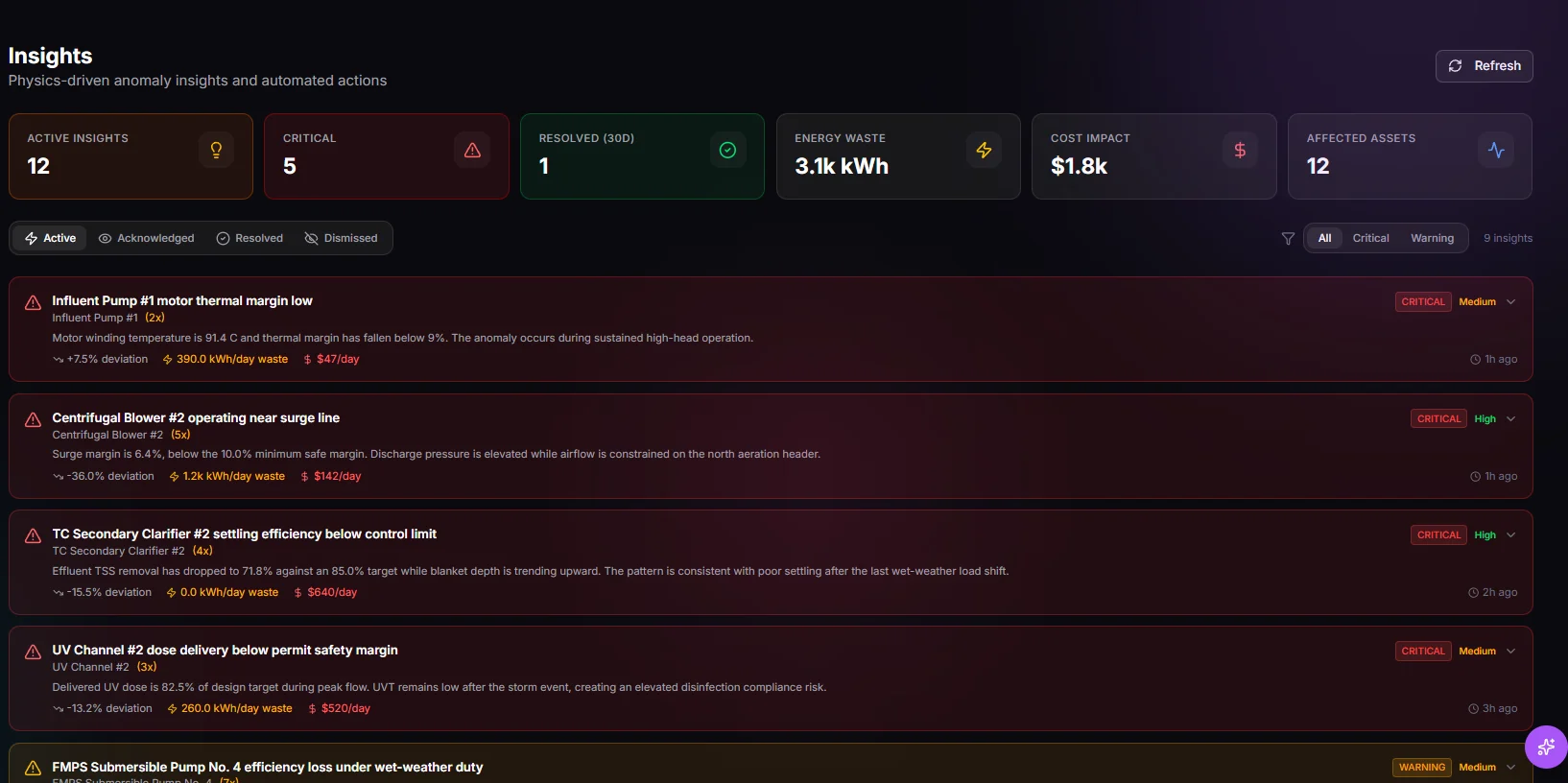
Reading the equipment changes every part of the job. Work can be raised because something is actually wrong. Services can be pushed back on machines that are running well. A repair can be checked afterwards to see whether it worked.
It also changes who trusts it. When the reason for a job is a reading rather than a rule, the engineer arguing against it has something to argue with.
“The calendar tells you a service is due. The machine tells you whether it was needed.”
What connected maintenance means
§ 02
What is in it.
Six areas, all reading the same record as the equipment.
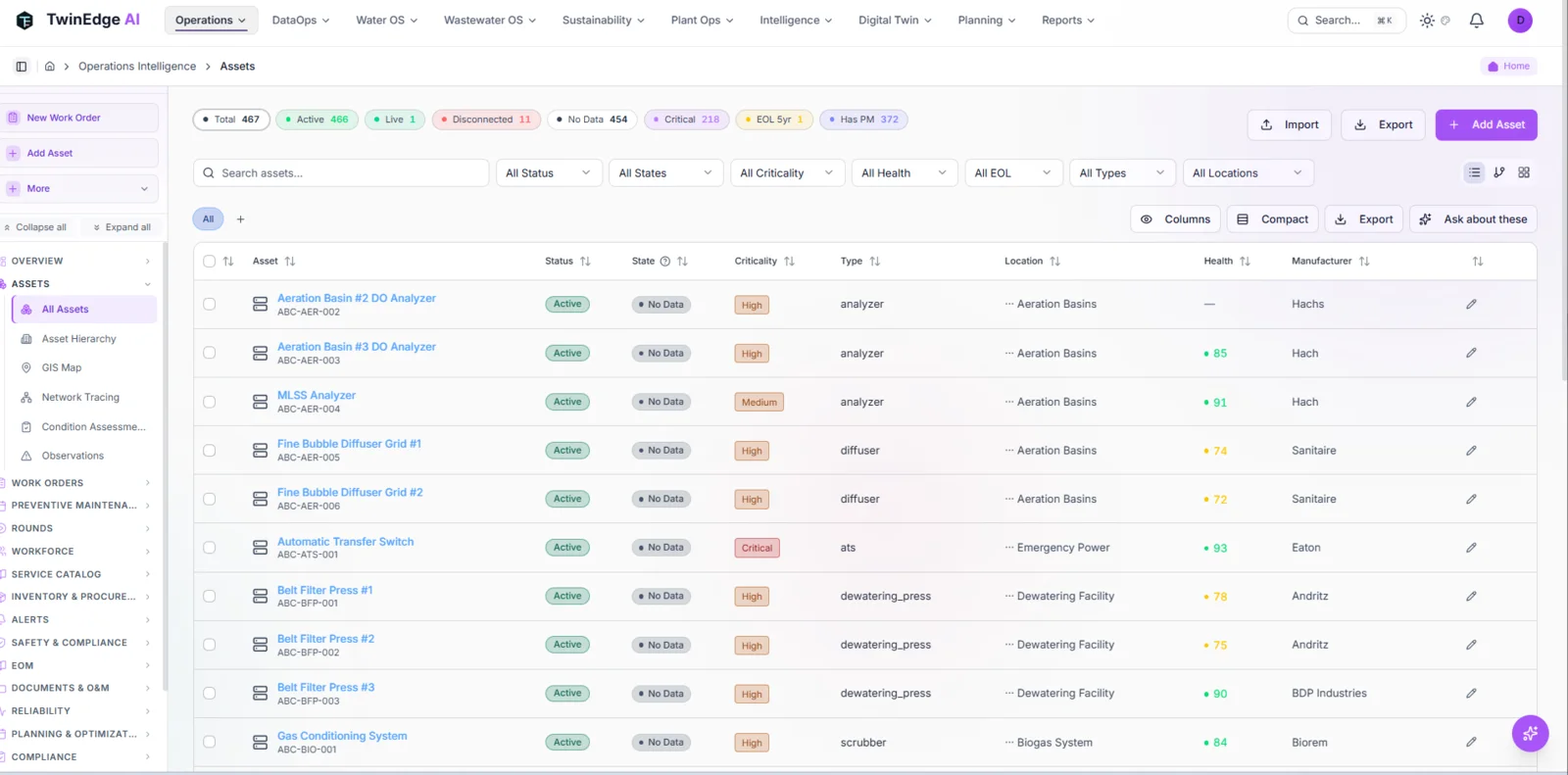
- 01Every machine, and what it is connected to
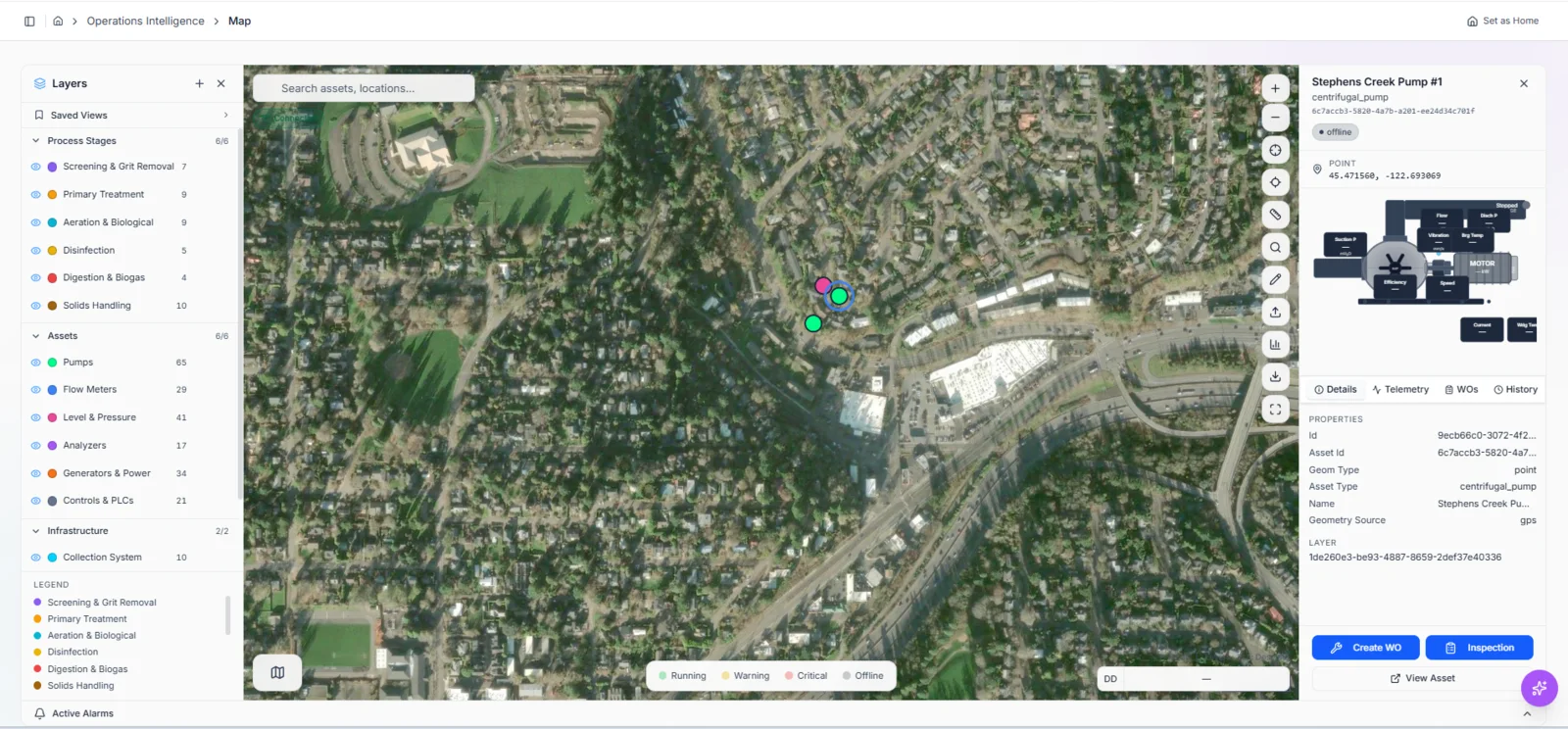
The structure of your equipment, where it sits on a map, what feeds what, its datasheets, its sensors, its condition, how fast it is wearing, and what it affects downstream when it stops.
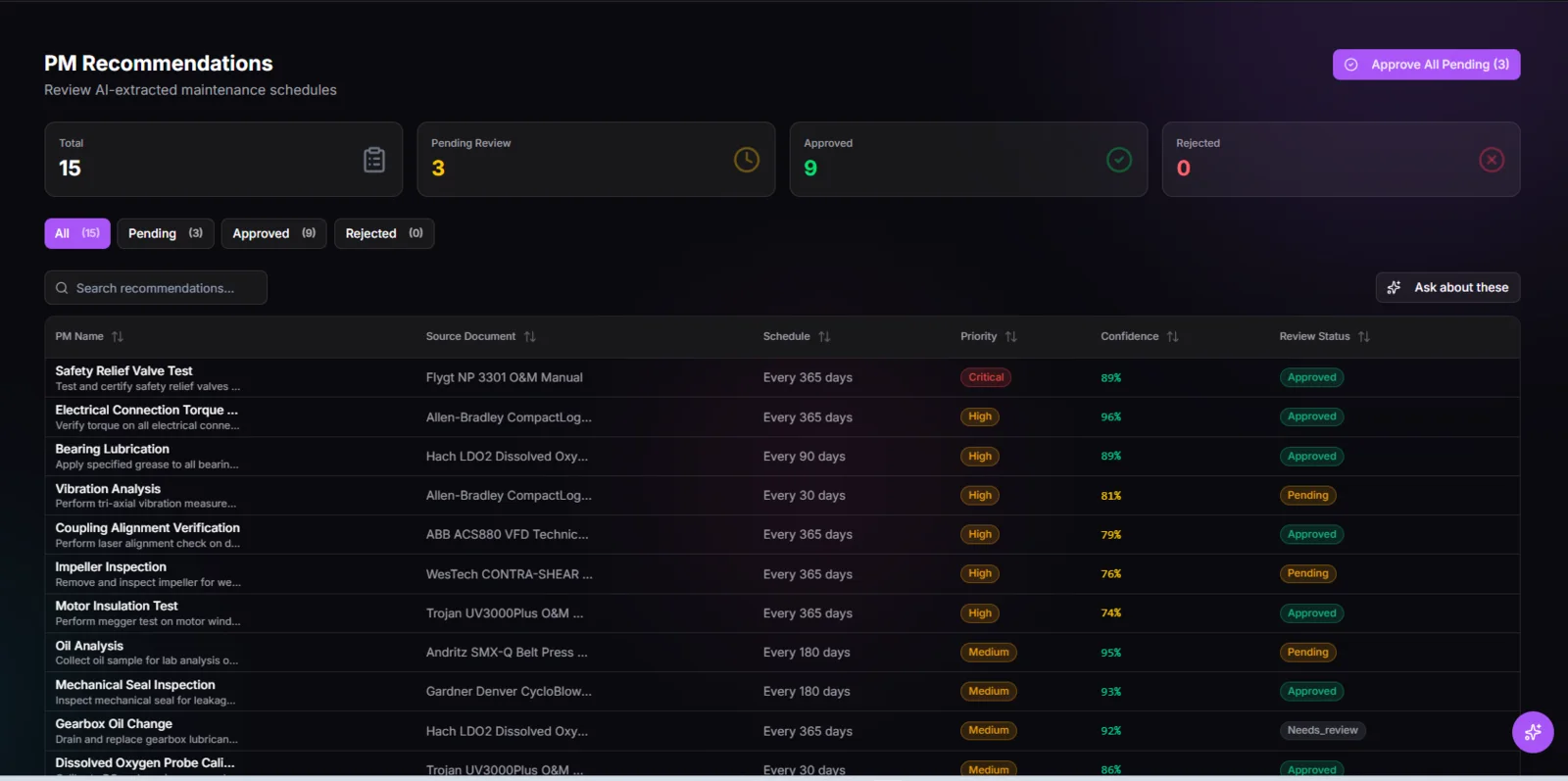
- 02Services, scheduled and suggested
Recurring work, standard procedures, and inspection rounds — plus services pulled out of your own manuals and services proposed from remaining life, wear, vibration, and how hard the machine has been worked.
- 03The manuals, made useful
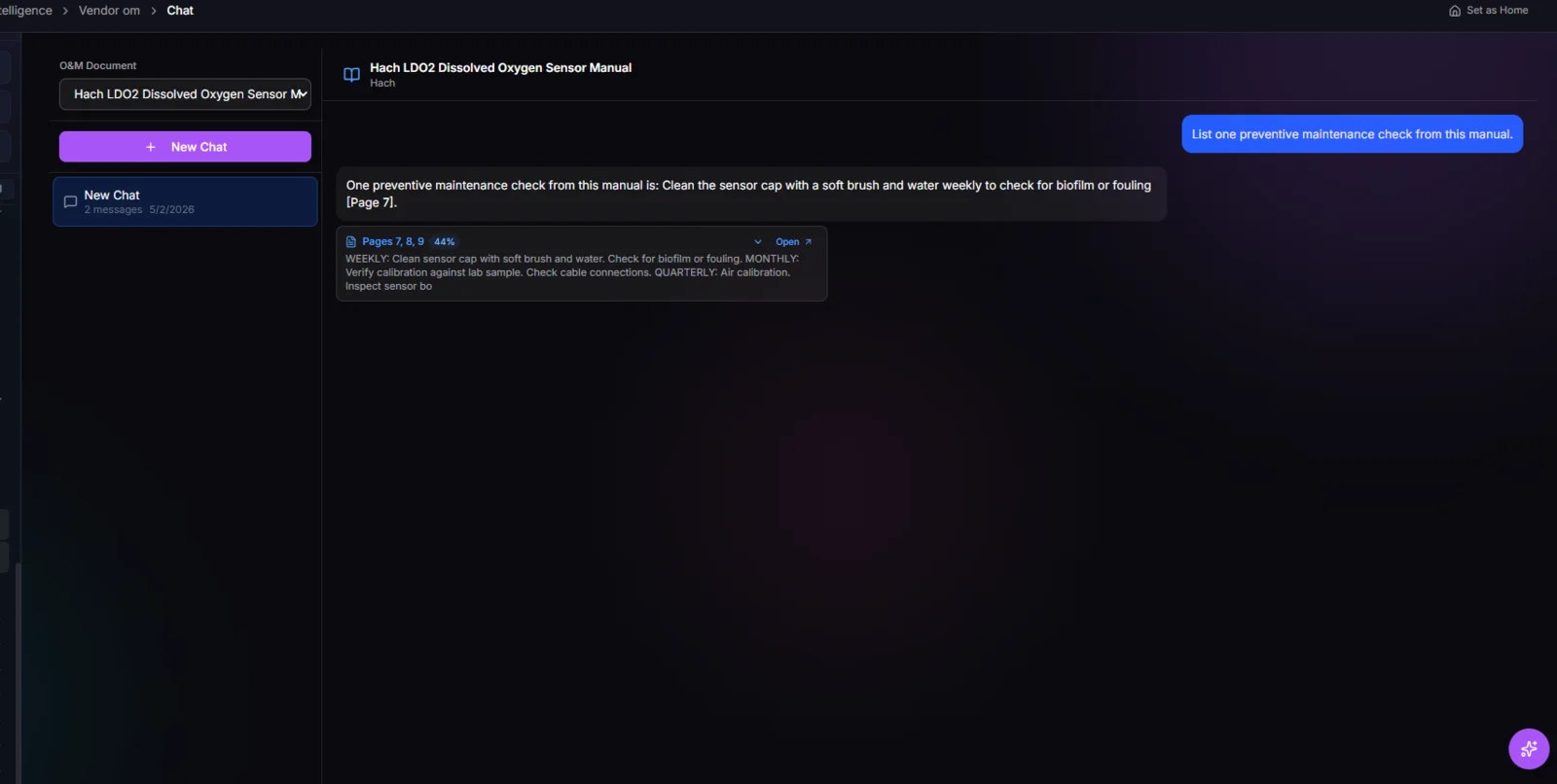
Supplier manuals, drawings, and procedures become something you can ask a question of, with the page it came from attached, instead of a folder of documents nobody opens.
- 04Getting the work done
Work orders, assignments, approvals, a scheduling board, rounds, who is available, travel time between jobs, and a morning brief for whoever is running the day.
- 05Why things keep breaking
Which machines are the worst offenders, what actually caused a failure, how failures cluster, and the standard reliability analysis, run against your own history rather than a textbook.
- 06Reporting people will read
Dashboards built per role, filters that carry across, pinned figures, and a proper reporting tool underneath when somebody wants to go deeper.
§ 03
What it looks like in use.
Bring the machine that keeps coming back.
Every plant has one: the pump, the compressor, or the unit that is serviced, signed off, and back on the list a month later. We will run its history through this and show you what the readings say was really happening.