Inspect the sources
Review tags, quality, schemas, and how records identify the equipment.
Assess sources, asset identity, and mapping requirements before building the next analytics or twin workflow.
Review tags, quality, schemas, and how records identify the equipment.
Document asset binding, naming, and the context the workflow needs.
Leave a source inventory, mapping plan, and prioritized first integration.
Keep the initial scope tied to a useful operating decision.
Retain mappings, configuration, and a repeatable workflow.
Use the first result to shape rollout and support.
A workspace for sources, tags, models, physics inputs, instances, pipelines, namespace, graph, catalog, APIs, MCP, and monitoring across operational systems.
Agents use operational context, physics model outputs, and operating envelopes to prepare evidence-backed recommendations with dry-run plans and approval gates.
AssetOps EAM, Field, Water OS, Wastewater OS, TwinEdge Chemical, Water Quality, Capital Planning, ESG, APIs, and MCP use the same trusted context.
Most plants run separate tools for readings, charts, maintenance, and reporting. People join them by hand. TwinEdge keeps the reading, the analysis, the work, and the capital decision on one asset record, so there is nothing to retype at a handover.
SCADA screens, historians, GIS maps, CMMS records, lab results, spreadsheets, PDFs, and operator notes all hold part of the answer. When something goes wrong, teams lose time reconciling systems instead of acting on a trusted view.
The platform is designed for measurable industrial outcomes: faster investigations, fewer avoidable failures, better maintenance decisions, lower operating waste, and cleaner audit evidence.
TwinEdge gives teams a shared timeline of readings, events, operating state, recommendations, approvals, and work evidence so troubleshooting does not start from a blank search.
Keep source context available as the workflow moves between teams and applications.
DataOps readiness
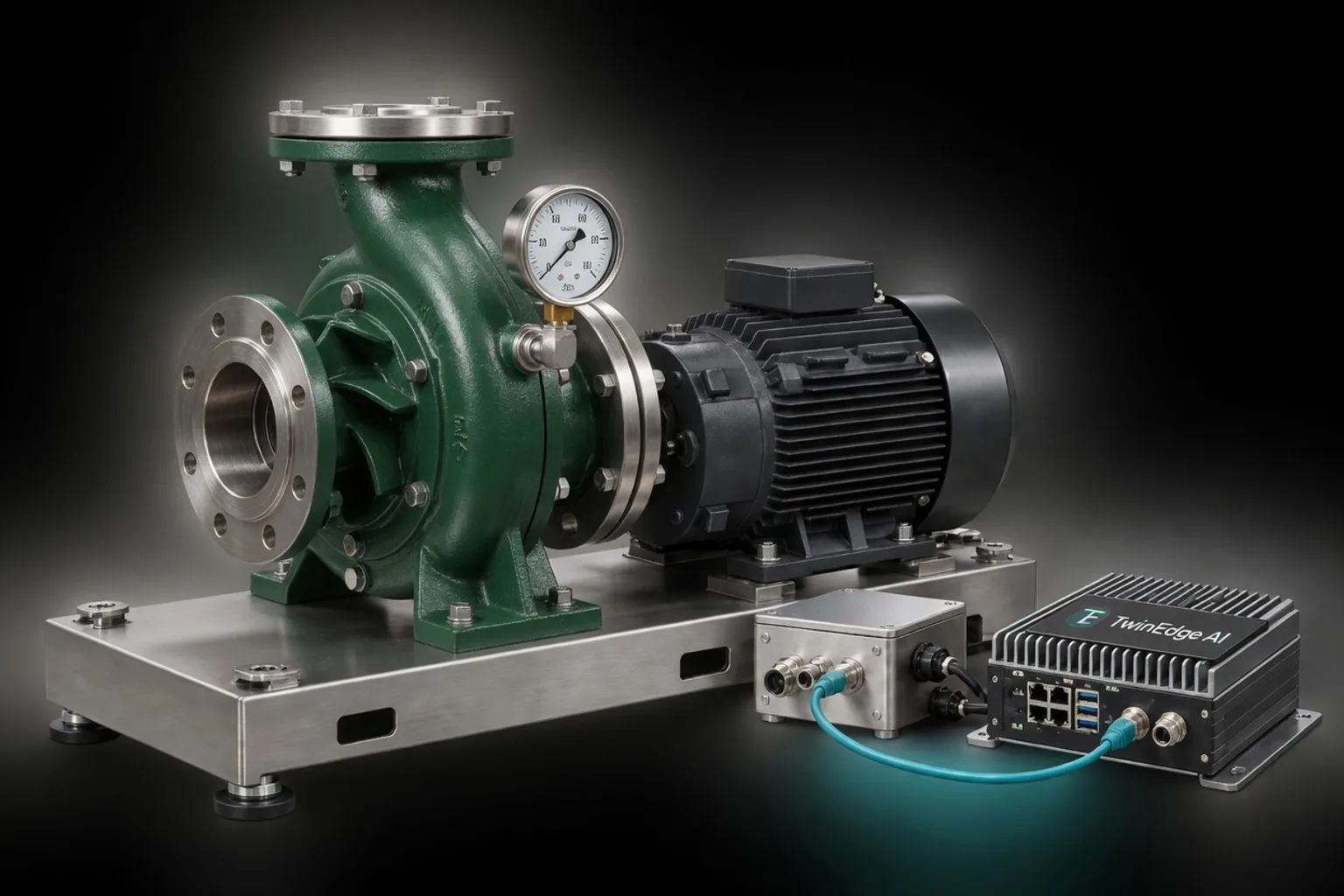
It connects a piece of equipment to its history, the reason a problem appeared, the maintenance job, and the decision to repair or replace it. The pump example on this page is the same loop for compressors, blowers, chillers, and other machines.
No. TwinEdge can read from the control system, historian, and maintenance system you already run. You can keep those tools, or switch later. Migration is free if you choose to switch.
Earlier warning before a failure, less wasted energy, clearer repair jobs for the crew, and a better basis for repair-or-replace decisions. Every step stays attached to the same equipment record.
On-premise, in the cloud, or both. TwinEdge OS can keep reading and storing at the site if the network is down. Capacity, usage, and token cost are set after a needs assessment.
No. Recommendations wait for a person to approve. Writeback to equipment is off unless you turn it on for a specific machine.
Discuss your sources, assets, and the outcomes your team wants to improve.