Governance and trust
Approval-gated industrial AI with evidence, replay, and bounded context.
TwinEdge keeps agents tied to governed source context, redacts credentials, requires approval for operational workflows, preserves diffs and traces, and disables physical writeback by default.
Redaction
Dry-run
Approval
Diffs
Replay
Audit
Governance is built into every recommendation, approval, and replay workflow.
Governance in action
Controls that make industrial AI reviewable before action
Every recommendation is grounded in bounded context, checked through policy gates, reviewed before handoff, and preserved with audit and replay evidence.
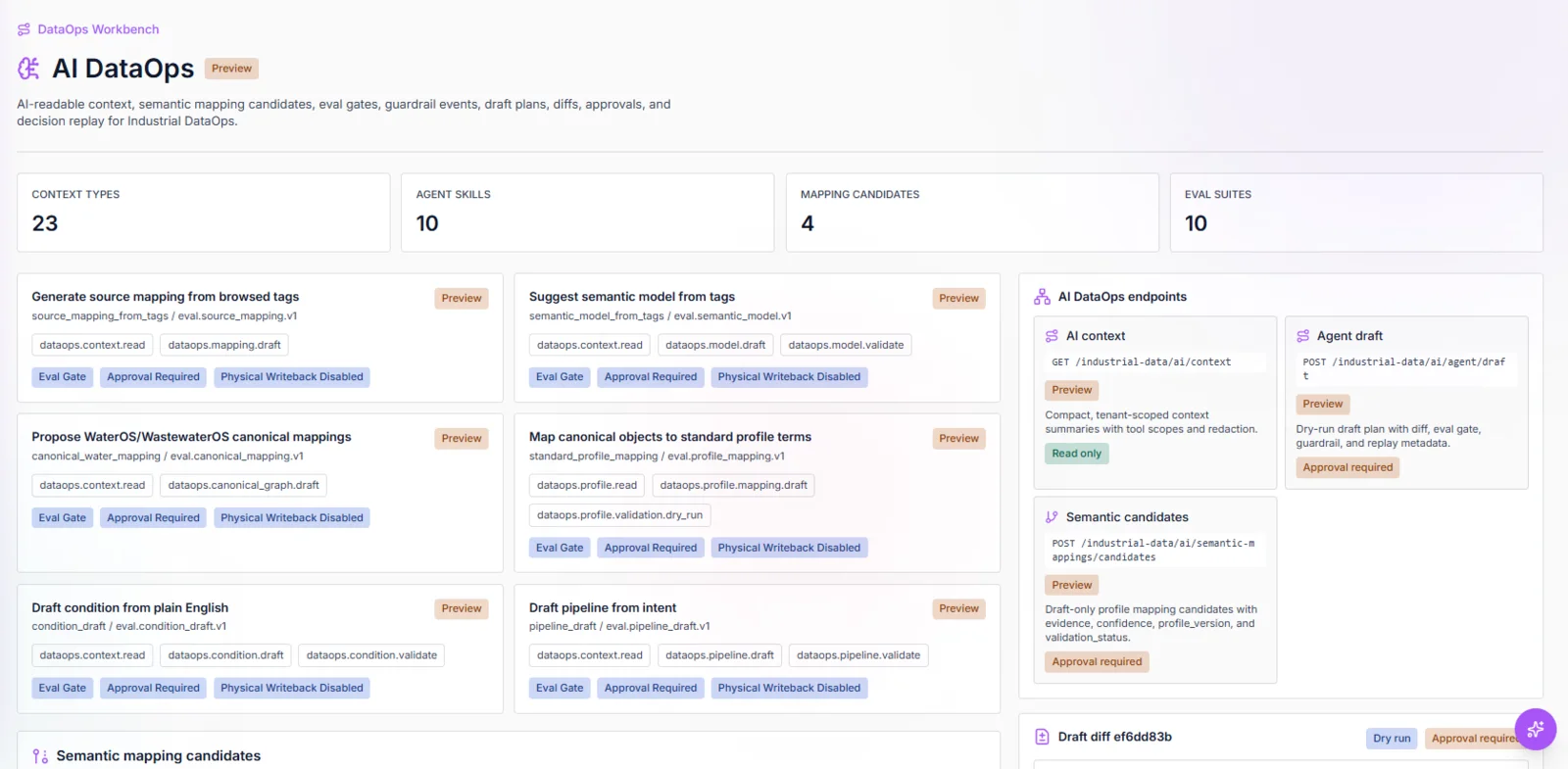
Bounded agent workspace
Agent work stays tied to approved industrial context, source evidence, review state, and controlled handoff instead of open-ended operational access.
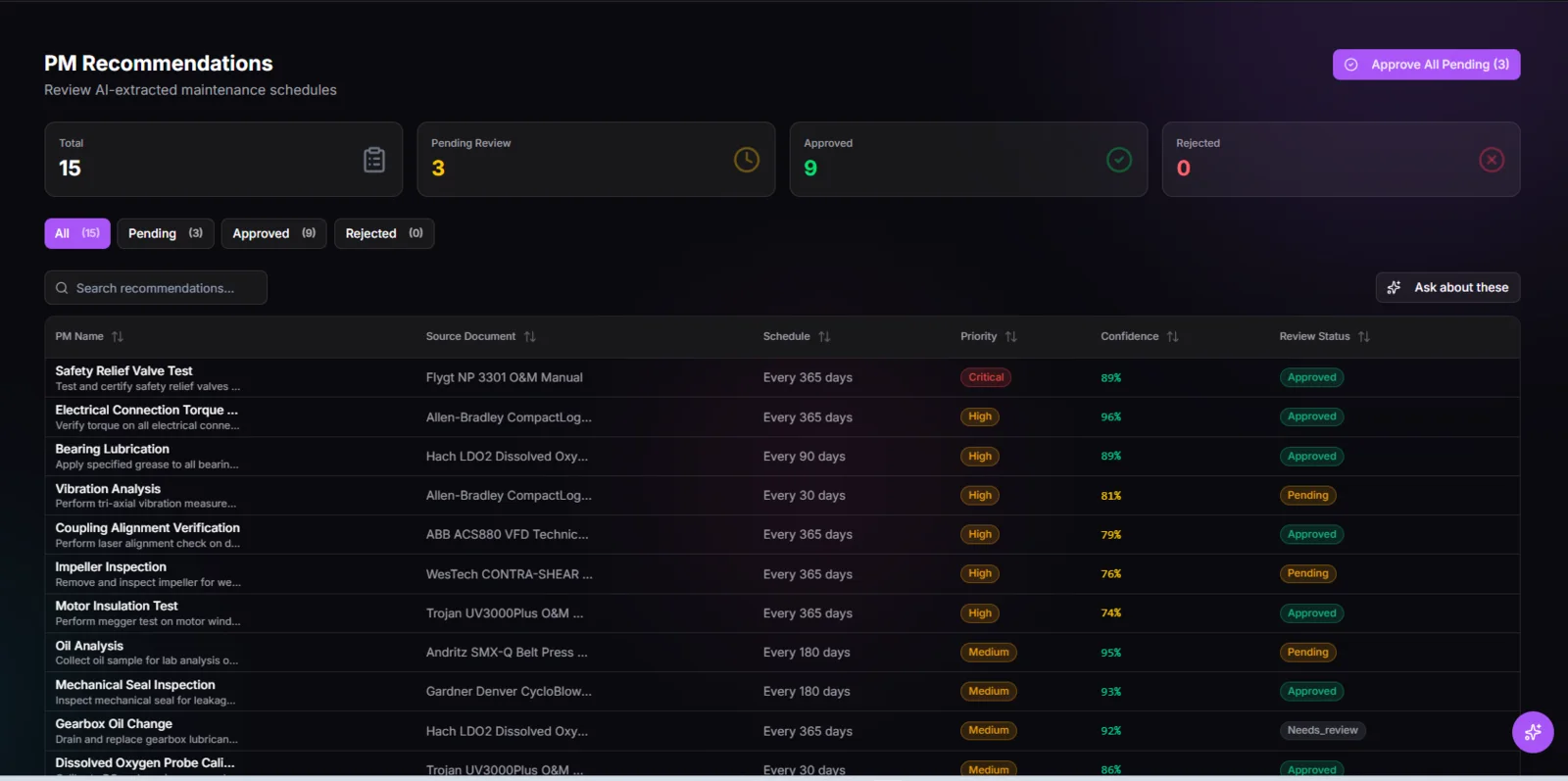
Approval-ready PM recommendations
Recommendations show source documents, cadence, priority, confidence, and review state so teams can approve work from evidence.
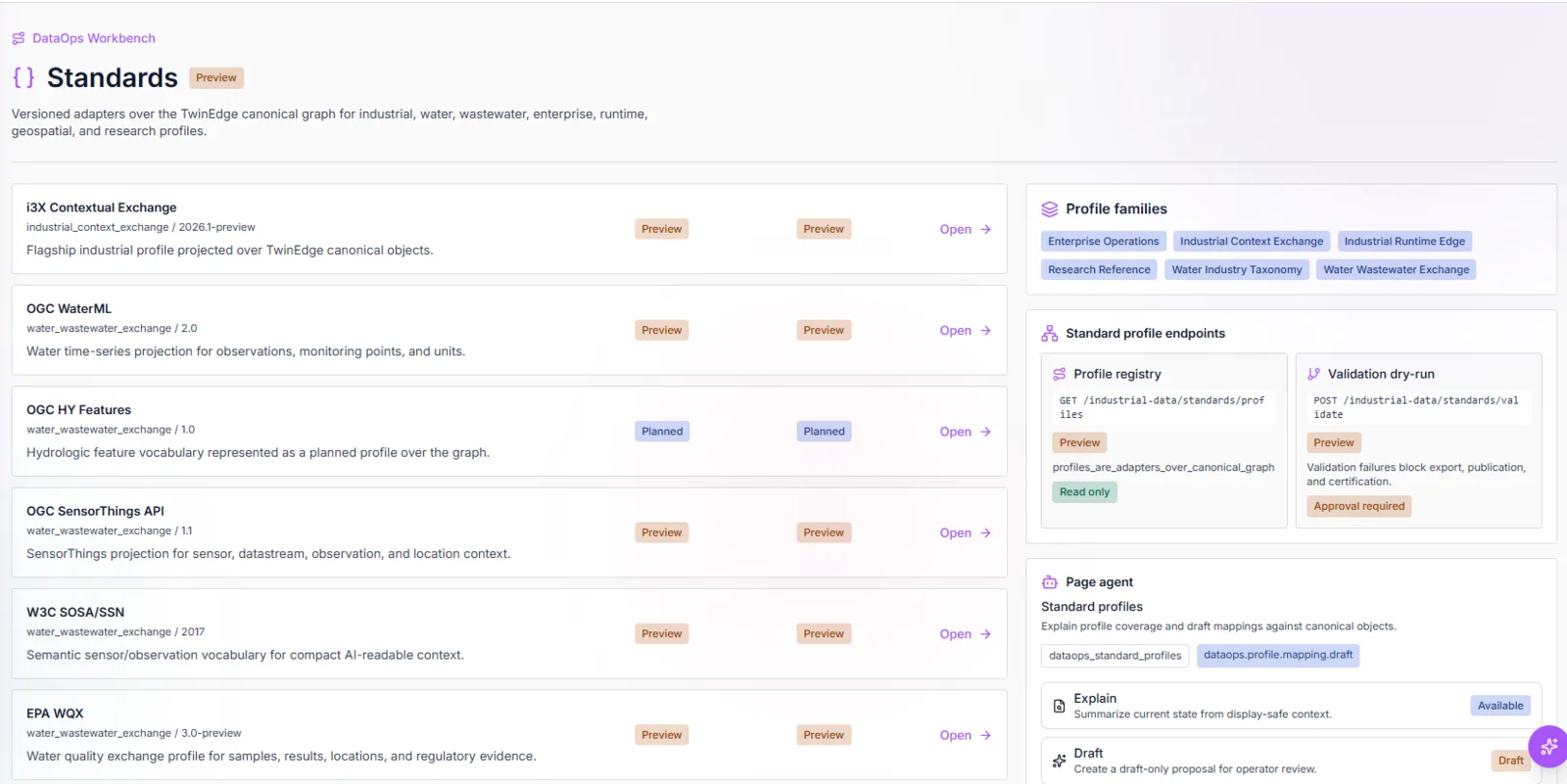
Standards and profile controls
Standards, adapters, validation endpoints, and profile families keep data products documented before they reach AI, apps, or workflows.
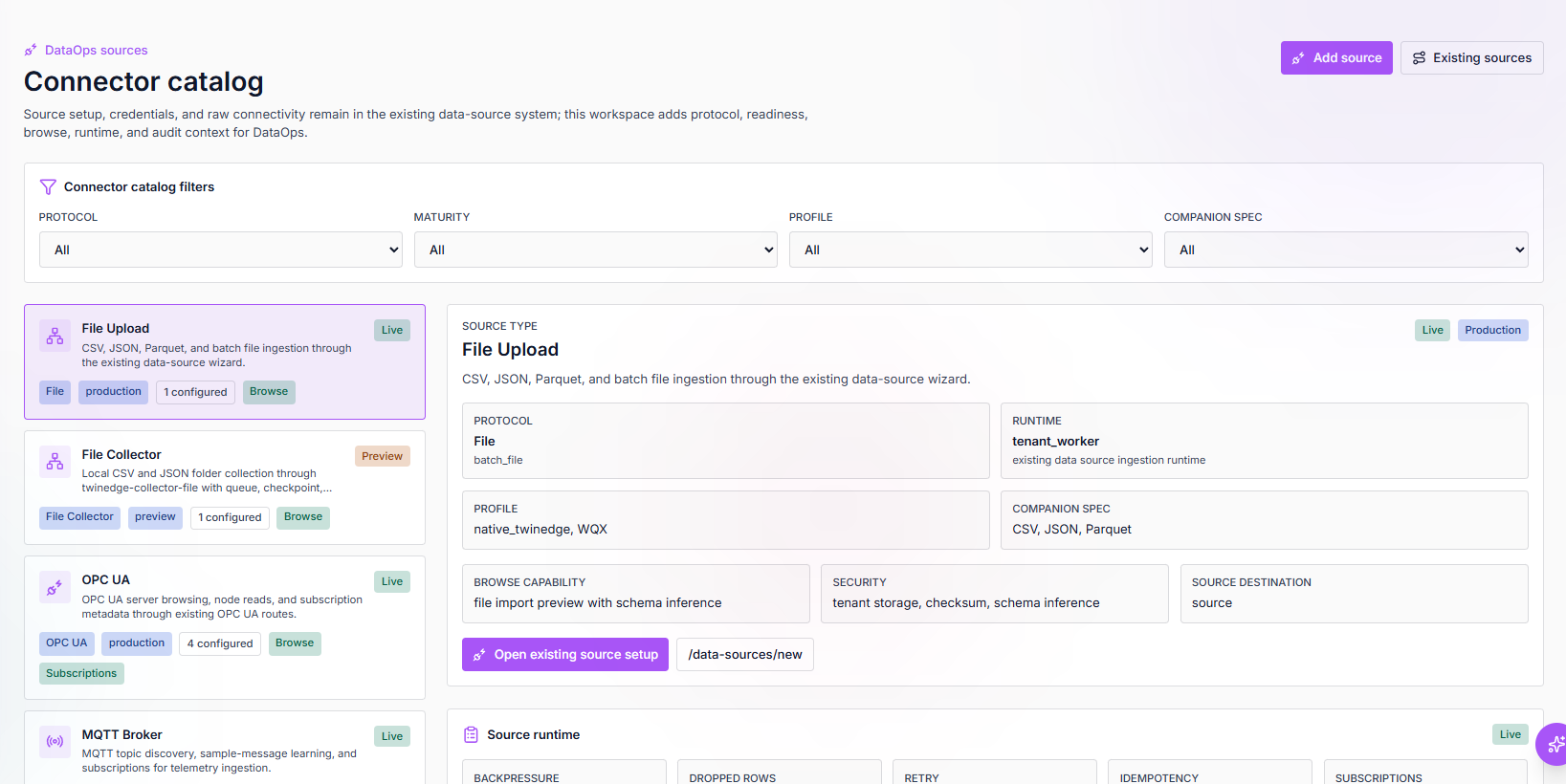
Source visibility before access
Connector setup, runtime state, credentials, browsing, and audit context remain visible before a source can feed recommendations.
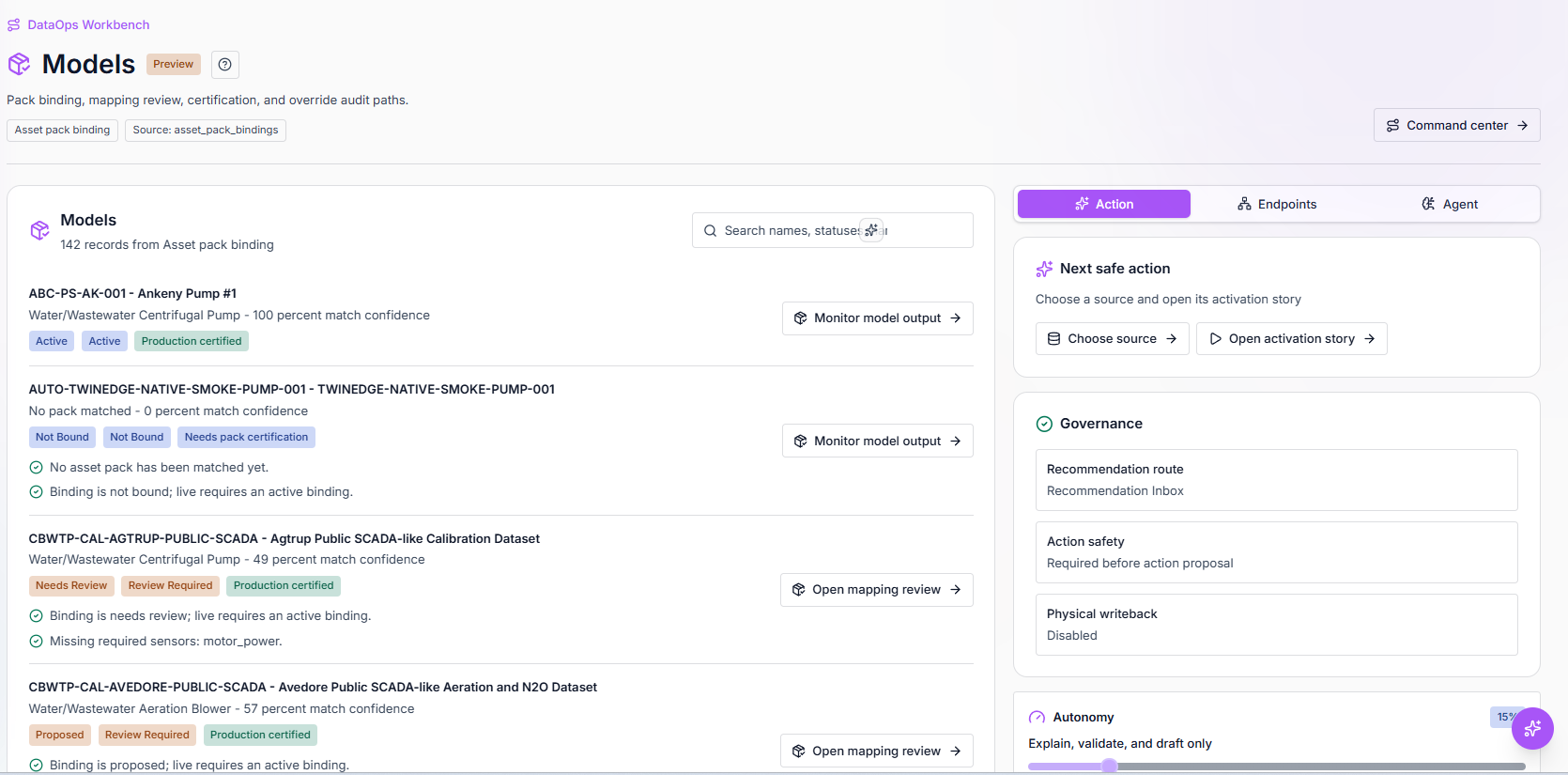
Graph-bound operational evidence
Model binding and mapping review connect raw industrial data to asset instances so approvals carry operational meaning.
Governance proof
Governance is strongest when it travels with the work.
TwinEdge governance covers source access, AI recommendations, work handoff, field execution, API/MCP publication, and reporting so teams do not manage trust in a separate disconnected process.
Dry-run
Before action
Plans and diffs are visible before operational handoff.
Human
Approval gates
Industrial teams keep responsibility and review authority.
Replay
Audit record
Source context, policy checks, approvals, and output remain reviewable.
Workflow
From source evidence to governed operational handoff
TwinEdge turns source context into reviewable recommendations by applying tenant scope, redaction, dry-run validation, approval gates, diffs, and replay evidence before work reaches operations.
Constrain the context
Start with approved source metadata, asset bindings, role scope, tenant boundaries, and evidence packs so agents only work inside known operational context.
Run policy gates before action
Redact credentials, generate dry-run plans, evaluate policy checks, show diffs, and require human approval before operational handoff.
Preserve the audit trail
Keep who approved, what changed, why it was allowed, source evidence, and replay material attached to the recommendation and work output.
Capabilities
Governance capabilities
Governance is not a separate review document. It is embedded into context access, agent behavior, recommendation review, work handoff, and replay.
Bounded access and redaction
Tenant scope, role boundaries, credential handling, and display-safe context reduce the chance of exposing sensitive source-system details.
Dry-run and approval gates
Recommendations are drafted, validated, diffed, and reviewed before work orders, field tasks, APIs, or integrations receive the output.
Audit, replay, and evidence
Source context, policy checks, traces, approvals, diffs, and replay evidence remain available for engineering, IT, and operational review.
Engineering controls
Engineering controls for industrial AI.
TwinEdge keeps operational AI bounded by source context, identity, review state, and replay evidence instead of claiming uncontrolled autonomy.
Read-only first
Physical writeback is disabled by default; recommendations move through approval gates before operational systems receive work.
Credential protection
Credential redaction and source boundaries keep sensitive connection details out of agent-facing context and user-visible payloads.
Reviewable changes
Dry-run plans, diffs, evaluation gates, and approval state make it clear what will change before teams accept the handoff.
Replayable evidence
Source context, policy results, approval history, and final output remain available for audit, incident review, and trust-building demos.
Outcomes
Value for operations, IT, and governance
Teams can move faster because the controls are visible in the workflow: context is bounded, recommendations are reviewable, and every accepted action keeps evidence.
Operations leaders
Approve AI-supported recommendations with source evidence, clear diffs, and a record of what will move into work execution.
Engineering and IT
Keep tenant scope, source boundaries, credential redaction, deployment choices, and replay evidence visible during evaluation and rollout.
Governance teams
Review policy gates, approvals, audit trails, and evidence without relying on screenshots, manual notes, or after-the-fact explanations.
Connected platform
Where governance applies across TwinEdge
The same governance model follows context from DataOps into agents, EAM, Field, APIs, MCP, monitoring, and industry workflows.
DataOps Workbench governs source readiness, connector visibility, standards, profile validation, and graph bindings.
Agentic Analytics uses bounded context, dry-runs, policy checks, approvals, diffs, traces, and replay.
AssetOps EAM and Field receive approved recommendations as reviewable work, inspections, tasks, and closeout evidence.
REST and MCP products expose context through scoped contracts, catalog metadata, audit, and usage monitoring.
TwinEdge OS supports local or no-cloud evaluation while keeping approval and replay evidence visible.
Monitor and audit surfaces show recommendation state, usage, product drift, policy results, and replay history.
Related for search and evaluation
Primary product for asset management and maintenance work.
Condition, physics, and remaining-life workflows.
Governed recommendations with approval and replay.
Maximo, HighByte, MaintainX, Fiix, and field alternatives.
Definitions for CMMS, DataOps, UNS, twins, and agents.
Labeled benchmarks and pilot methods.
Evaluate TwinEdge
Prove industrial AI governance before expanding autonomy.
Start with one source, one recommendation workflow, and one approval path so teams can see the controls, evidence, and replay trail before scaling.